
Dental Implants vs Bridges: Complete Comparison Guide for Tooth Replacement
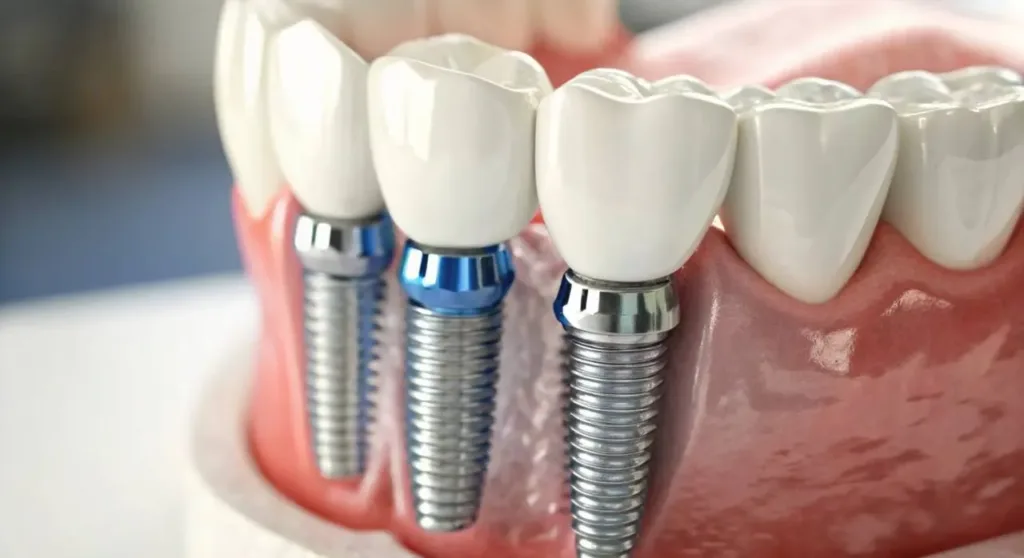
Choosing between dental implants vs bridges represents one of the most important decisions when replacing missing teeth. In fact, both options effectively restore function and appearance, yet they differ significantly in procedure, longevity, and impact on surrounding teeth. Moreover, understanding these differences helps you make an informed choice aligned with your oral health goals and budget. If you’re facing the dental implants vs bridges decision, schedule a consultation at Tangerbay in Tangier for personalized recommendations based on your unique situation.
What Are Dental Implants?
First, dental implants are titanium posts surgically placed into the jawbone to replace missing tooth roots. Specifically, the implant integrates with the bone through a process called osseointegration over 3-6 months. Subsequently, an abutment connects the implant to a custom crown that looks and functions like a natural tooth.
Furthermore, implants can replace single teeth, multiple teeth, or even support full dentures. Additionally, they’re considered the gold standard in tooth replacement because they preserve jawbone and don’t affect adjacent teeth. In fact, dental implants are the only option that prevents bone loss in the jaw. At Tangerbay, we use premium implant brands (Nobel Biocare, Straumann) ensuring optimal results and longevity.
What Are Dental Bridges?
On the other hand, dental bridges are fixed prosthetic devices that « bridge » the gap created by missing teeth. Specifically, traditional bridges consist of one or more artificial teeth (pontics) held in place by crowns cemented onto the adjacent natural teeth (abutments). Therefore, bridges require modifying healthy neighboring teeth by removing enamel to accommodate the crowns.
Moreover, bridges come in several types: traditional (most common), cantilever (supported on one side only), Maryland (bonded with metal wings), and implant-supported. Additionally, the entire bridge is custom-made in a dental laboratory to match your natural teeth. Consequently, bridges restore aesthetics and chewing function relatively quickly, typically within 2-3 weeks.
Dental Implants vs Bridges: Procedure Comparison
When considering dental implants vs bridges, the procedures differ significantly. First, implant placement requires surgery under local anesthesia. Initially, the implant is placed into the jawbone, then the gum is sutured closed for healing. After 3-6 months of osseointegration, a second minor surgery exposes the implant, an abutment is attached, and finally a crown is placed. Therefore, the complete process takes 4-8 months from start to finish.
Conversely, bridge placement is much faster and non-surgical. First, the dentist prepares the adjacent teeth by removing enamel and reshaping them. Next, impressions are taken and sent to a laboratory. Meanwhile, a temporary bridge protects the prepared teeth. Finally, after 2-3 weeks, the permanent bridge is cemented in place. Consequently, bridges offer quicker completion but require altering healthy teeth.
Nevertheless, dental implants vs bridges differs in invasiveness too. Indeed, implants require oral surgery with a healing period, while bridges involve only preparation and cementation appointments. However, advances in implant technology have made procedures faster and more comfortable than ever. Tangerbay’s experienced surgical team minimizes discomfort using advanced techniques and sedation options.
Longevity and Durability
Regarding lifespan, dental implants vs bridges shows significant differences. First, dental implants can last 25+ years or even a lifetime with proper care. In fact, the titanium post rarely fails once integrated, though the crown may need replacement after 10-15 years due to wear. Moreover, implant success rates exceed 95% for healthy patients.
Conversely, traditional bridges typically last 10-15 years before requiring replacement. Indeed, the supporting teeth may develop decay or structural problems over time. Additionally, the cement bond can weaken, causing bridge loosening. Furthermore, bone loss under the pontic continues since there’s no root stimulation.
Therefore, while implants cost more initially, their longevity makes them more cost-effective long-term. Nevertheless, bridges serve well for many years when properly maintained. Ultimately, dental implants vs bridges longevity depends on oral hygiene, regular dental visits, and individual factors like bite forces and grinding habits.
Impact on Adjacent Teeth
Perhaps the most significant difference in dental implants vs bridges involves impact on neighboring teeth. First, dental implants stand independently without relying on adjacent teeth. Consequently, healthy neighboring teeth remain completely untouched and unaltered. Moreover, implants distribute chewing forces naturally into the jawbone, similar to natural tooth roots.
In contrast, traditional bridges require grinding down healthy adjacent teeth to serve as anchors. In fact, removing enamel permanently weakens these teeth and increases their risk of decay and sensitivity. Furthermore, these abutment teeth bear additional stress from supporting the pontic. Consequently, they may fail over time, potentially requiring additional treatment.
Additionally, implant-supported bridges offer a compromise, using implants instead of natural teeth as anchors. Therefore, this option combines the benefits of both approaches for multiple missing teeth. However, it still requires implant surgery. At Tangerbay, we carefully evaluate your situation to recommend the approach that best preserves your remaining teeth.
Bone Health Preservation
Concerning bone health, dental implants vs bridges reveals a crucial difference. First, dental implants stimulate the jawbone through chewing forces, just like natural roots. Consequently, they prevent the bone resorption (shrinkage) that normally follows tooth loss. In fact, maintaining bone volume preserves facial structure and prevents the « sunken » appearance associated with tooth loss.
Conversely, bridges don’t address bone loss at all. Indeed, without root stimulation, the jawbone beneath the pontic gradually deteriorates. Over years, this can cause facial changes and may complicate future tooth replacement options. Moreover, significant bone loss makes implant placement difficult without grafting procedures.
Therefore, if bone preservation matters for long-term oral health and facial aesthetics, implants offer clear advantages. Nevertheless, bridges work well when bone loss isn’t a primary concern or when surgery isn’t feasible. Tangerbay provides 3D imaging to assess your bone condition and predict long-term outcomes.
Cost Comparison
Budget considerations play a major role in dental implants vs bridges decisions. First, dental implants typically cost more upfront, ranging from 8,000-15,000 MAD per tooth including surgery, abutment, and crown. However, bone grafting or sinus lifts add to costs if needed. Nevertheless, their longevity makes them economical over decades.
On the other hand, traditional bridges cost less initially, typically 6,000-12,000 MAD for a three-unit bridge. However, replacement after 10-15 years means repeated costs. Moreover, if abutment teeth develop problems, additional expenses arise for crowns or even implants.
Furthermore, insurance coverage varies significantly. Generally, bridges receive better coverage than implants, which many plans consider cosmetic. Therefore, check your insurance benefits before deciding. Additionally, consider payment plans and financing options many clinics offer. Tangerbay provides transparent pricing and flexible payment solutions to make quality care accessible.
Maintenance and Care
Daily care differs slightly in dental implants vs bridges comparison. First, dental implants require the same care as natural teeth: brushing twice daily, daily flossing, and regular dental checkups. Additionally, special floss threaders or water flossers help clean around the crown and abutment. Moreover, avoiding excessive forces (like chewing ice) protects the crown.
Similarly, bridges need diligent cleaning, especially underneath the pontic where food debris accumulates. Specifically, floss threaders or interdental brushes clean under the bridge effectively. Furthermore, regular professional cleanings remove plaque buildup that home care misses. Additionally, bridges may require more frequent dental visits to monitor the health of abutment teeth.
Importantly, both options demand excellent oral hygiene to prevent complications. In fact, poor hygiene causes peri-implantitis (gum disease around implants) or decay in bridge abutments. Therefore, commitment to maintenance determines long-term success regardless of choice. Tangerbay’s hygiene team provides personalized care instructions for your specific restoration.
Best Candidates for Each Option
Determining suitability in dental implants vs bridges depends on individual factors. First, ideal implant candidates have good general health, adequate bone volume, healthy gums, and no uncontrolled conditions like diabetes or heavy smoking. Moreover, they prefer a long-term, independent solution and can commit to the extended treatment timeline. Additionally, they want to preserve adjacent teeth and bone structure.
Conversely, good bridge candidates prefer faster completion without surgery, may have medical conditions contraindicting implant surgery, have limited bone volume making implants complex, or budget constraints favor lower initial costs. Furthermore, bridges work well when adjacent teeth already need crowns.
However, poor candidates for bridges include those with weak abutment teeth, aggressive decay or gum disease, or strong desire to preserve healthy tooth structure. Meanwhile, implants may not suit patients with insufficient bone (unless willing to graft), uncontrolled medical conditions, or heavy smokers. Schedule a comprehensive evaluation at Tangerbay to determine which option best matches your needs.
Making Your Decision
Ultimately, the dental implants vs bridges choice depends on multiple factors. First, consider your priorities: long-term durability, bone preservation, avoiding alteration of healthy teeth, speed of completion, or initial cost. Second, evaluate your oral health: bone quantity, gum condition, and health of adjacent teeth all influence which option works best.
Third, assess your general health and any conditions affecting healing or surgery success. Fourth, consider your lifestyle: commitment to oral hygiene, smoking status, and ability to attend multiple appointments. Fifth, discuss your budget realistically, including long-term costs of replacement and maintenance.
Importantly, consult with an experienced dentist who can objectively evaluate your situation. In fact, sometimes a combination approach works best—implants for some teeth and bridges for others. At Tangerbay, we provide honest recommendations without pressure, ensuring you make the right choice for your unique situation.
FAQ
Can I get an implant years after tooth loss?
Yes, though bone loss may require grafting first. The sooner after extraction, the better.
Are bridges noticeable?
No, modern bridges are custom-crafted to blend seamlessly with your natural teeth.
Which is more painful: implants or bridges?
Implants involve surgery but heal well. Bridges avoid surgery but may cause sensitivity in prepared teeth.
Can I convert my bridge to an implant later?
Yes, but the abutment teeth will need crowns since they’ve been permanently altered.
Do implants feel like real teeth?
Yes, most patients report implants feel completely natural after healing.
How long do I wait after extraction for an implant?
Typically 3-6 months for bone healing, though immediate implants are sometimes possible.
Will my bridge look fake?
Not with quality materials and skilled craftsmanship. Porcelain matches natural teeth perfectly.
Which lasts longer: implants or bridges?
Implants typically last 25+ years vs. 10-15 years for bridges.
